





BYD Arrives in Australia with 5,000 Vehicles, Vying for Top Sales Spot
Source:CNSS
2026-06-04
On June 1, BYD made its first-ever Australian port call with its own car carrier, delivering 5,000 hybrid and electric vehicles.
The BYD ZHENGZHOU is one of eight car carriers owned and operated by BYD, and typically services the route from China to South America. It was temporarily reassigned to Australia in response to a surge in local electric vehicle demand that began in March this year.
This marks the first time BYD has deployed its own RoRo vessel on the Australian trade. The shipment forms part of BYD's plan to supply an additional 30,000 new energy vehicles to the Australian market over the coming months.
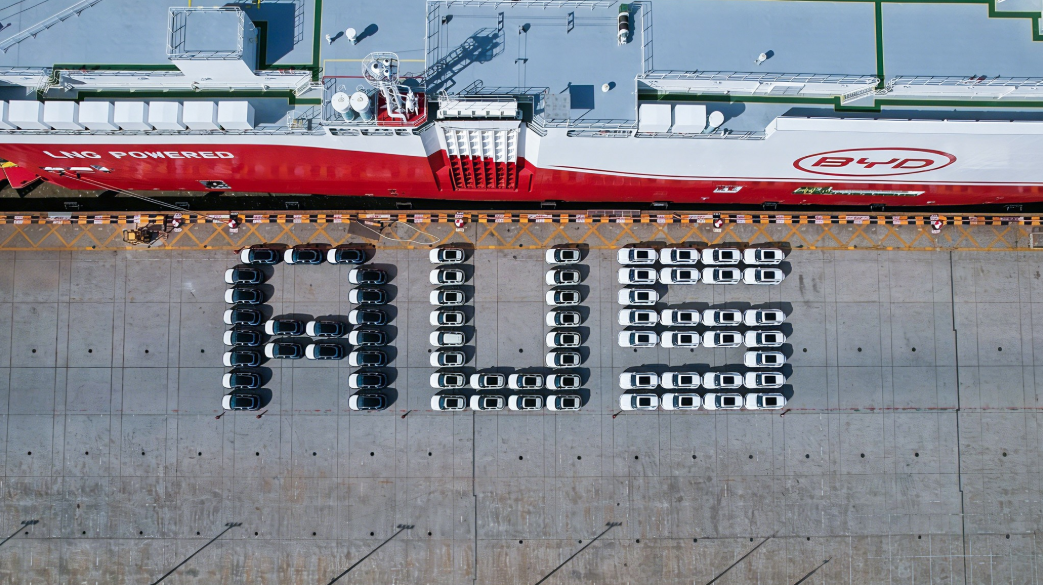
Earlier this year, as a fuel supply crisis gripped Australian motorists, BYD re-initiated its local market push and decided to dispatch its own vessel to Australia for the first time. In April, BYD Vice President Liu Xueliang told media that the conflict in the Middle East and the resulting fuel supply concerns had "completely changed the way people think about energy supply," thereby accelerating market demand for electric vehicles.
Stephen Collins, Chief Operating Officer of BYD Australia, stated: "We saw very strong demand for EVs during the Middle East oil crisis, particularly around March, and that was the primary reason we routed this vessel to Australia."
The US-Iran conflict has almost entirely blocked fuel shipments through the critical Strait of Hormuz waterway, triggering an energy crisis that has pushed up oil prices and caused a global surge in demand for electric vehicles.
According to Bloomberg, 206,200 electric vehicles were sold in Europe in the first four weeks following the outbreak of the conflict in March—a 44% increase over the same period last year. Sales doubled in the South Korean market and soared by 76% in Italy.
Tim Buckley, an energy analyst and director of the think tank Climate Energy Finance, noted that BYD now controls every stage of its operations, from the mining of critical minerals, to the design and manufacture of batteries and components, through to vehicle assembly and global delivery.
This is what allows BYD to respond rapidly to demand spikes. In addition to its plants in China, BYD also operates new factories in Thailand, Brazil, and Uzbekistan.
The Australian Financial Review reported earlier this year that BYD operates a dedicated production line in China for right-hand-drive vehicles destined for Australia and New Zealand, which can roll a vehicle off the line every 52 seconds.
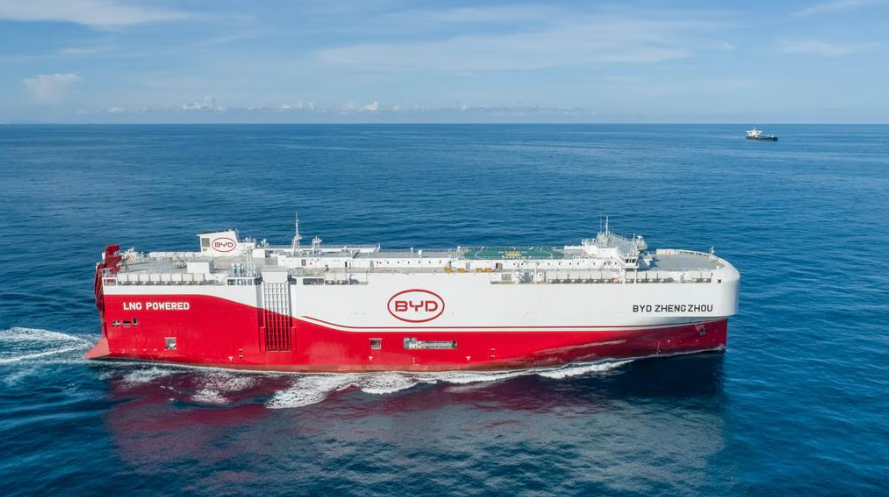
Mr. Collins also pointed to BYD's internal structure as enabling its rapid response to demand shifts. "The organizational structure at BYD is very flat, meaning decisions are made quickly and without red tape. I would say it was a matter of just a few short weeks from us identifying the surge in demand to receiving global approval to increase production and ship the vehicles," he said.
Amid rising transport costs during the pandemic, BYD invested US$687 million to build its own fleet of eight car carriers. The company estimates that using its own vessels can reduce per-vehicle transport costs by 30% to 40%, delivering annual savings of up to US$1.4 billion. Each vessel can carry between 7,000 and 9,000 vehicles.
BYD has become a major force in driving China to become the number one source of new vehicles for Australia, surpassing countries such as South Korea, Thailand, and Japan.
In April this year, BYD's Australian sales ranking jumped to second place, behind only Toyota. The 5,000 vehicles delivered this week will help BYD close the gap further. Toyota's sales currently stand at around 7,400 units. If Toyota underperforms in June, BYD could become the top-selling automotive brand in Australia.
Hot News