





US-Iran Deal Set to Be Signed, But Shipowners Remain Uneasy
Source:CNSS
2026-06-17
The agreement scheduled to be signed between the US and Iran on June 19 has raised optimistic expectations for the reopening of the Strait of Hormuz, yet considerable uncertainty persists. Multiple shipping companies stated on June 15 that further details need to be clarified before formal transit can resume, and they require safety conditions to be more definitively established before allowing their vessels to resume passage through the maritime chokepoint.
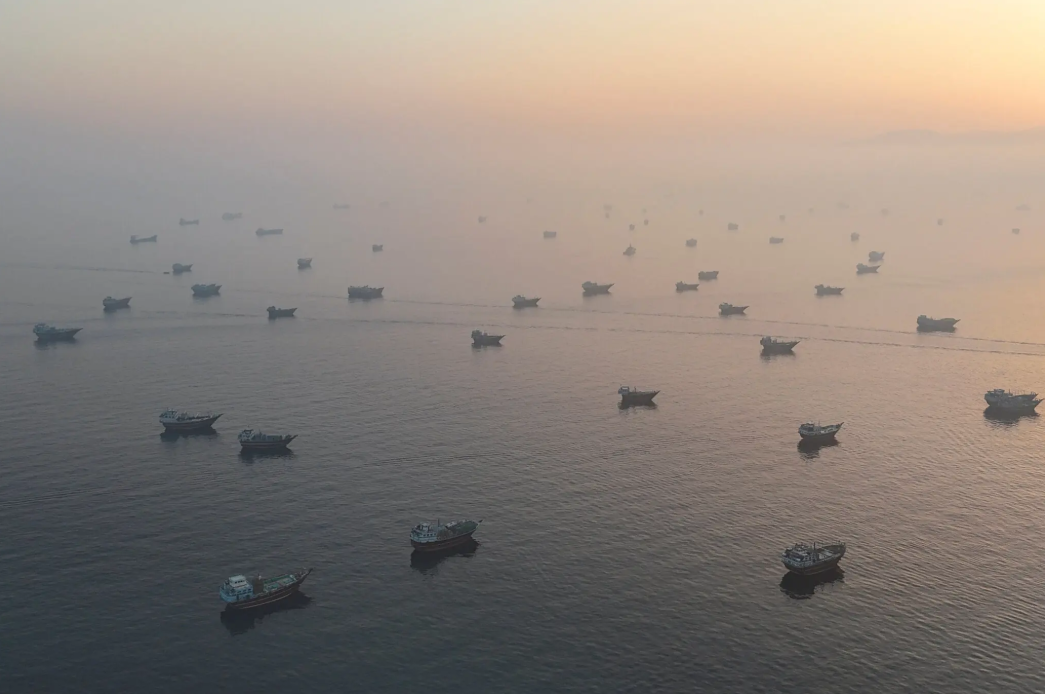
Kpler data indicates that approximately 500 large commercial vessels remain stranded in the Persian Gulf. The Japanese Shipowners' Association stated that it will await "more definitive information" before making a decision, noting that there are currently 38 Japanese-linked vessels trapped in the Gulf.
Harry Vafias, CEO of Stealth Gas, commented: "Let's hope it's true this time." His company has had three vessels stranded in the Persian Gulf for over three months. He expressed hope that firm guarantees could be secured following the signing of the agreement this Friday, but added, "I doubt that's likely."
Andreas Enger, CEO of Höegh Autoliners, indicated that news of the agreement alone is not sufficient to immediately resume vessel transits. "But we hope this is a first step in that direction," he said. Mr. Enger stated that it could take weeks or even months before he would feel comfortable dispatching vessels into the Persian Gulf. "There are still uncertainties, and it is likely to drag on further," he noted. The company previously had one vessel trapped, which was only able to exit the Gulf under heavy US naval air and sea escort.
HMM stated that the company will make a decision after further assessing the situation. "We are still verifying the specific transit procedures and safety assurance measures. We have not yet formulated any concrete plans. The safety of our crew and vessels has always been our absolute priority." Since the outbreak of the US-Iran conflict, HMM has had four vessels trapped in the Strait of Hormuz, and has also had vessels attacked.
Another shipping giant, Mitsui O.S.K. Lines, stated that despite signs of progress in ceasefire negotiations, its policy of not transiting the Strait of Hormuz remains unchanged. "We recognise that there have been positive developments regarding a ceasefire, but we will not resume transits until safety is fully confirmed," the company said. MOL added that any decision to resume transits would require close coordination with relevant national governments, insurers, and other stakeholders.
Erik Hanell, CEO of Stena Bulk, said the company is adopting a cautious approach. "We have to wait until the agreement is signed and see what actually happens and whether the terms of the deal can be implemented." During the early stages of the conflict, the company's Stena Imperative was struck by a missile while anchored in Bahrain, resulting in one fatality and two serious injuries.
IMO Secretary-General Arsenio Dominguez stated on Monday that the agreement is "a significant step toward restoring the safety and security of seafarers and ships in this vital maritime passage." He cautioned, however, that it would still take time to ensure safety and security measures were in place to evacuate the tens of thousands of trapped seafarers. Additionally, a series of substantial logistical measures would need to be implemented before vessels could begin safely transiting the strait.
Pankaj Khanna, CEO of Heidmar Maritime, expressed hope that the deal would provide a framework for safe vessel passage, including guidance on how to select routes to avoid hazards such as mines. His company has one vessel currently trapped in the Gulf.
The routes ships would take to exit the Gulf are not uniform: some vessels have been hugging the Iranian coast, reportedly with Iranian approval, while others have been sailing close to Oman, coordinated by the US military. Facing this dilemma, Mr. Khanna put it bluntly: "Do you rely on Iran, or do you rely on Oman?"
Hot News