





Banned! Taiwan Region Bulk Carrier Accused of Underpaying Seafarers
Source:CNSS
2026-05-09
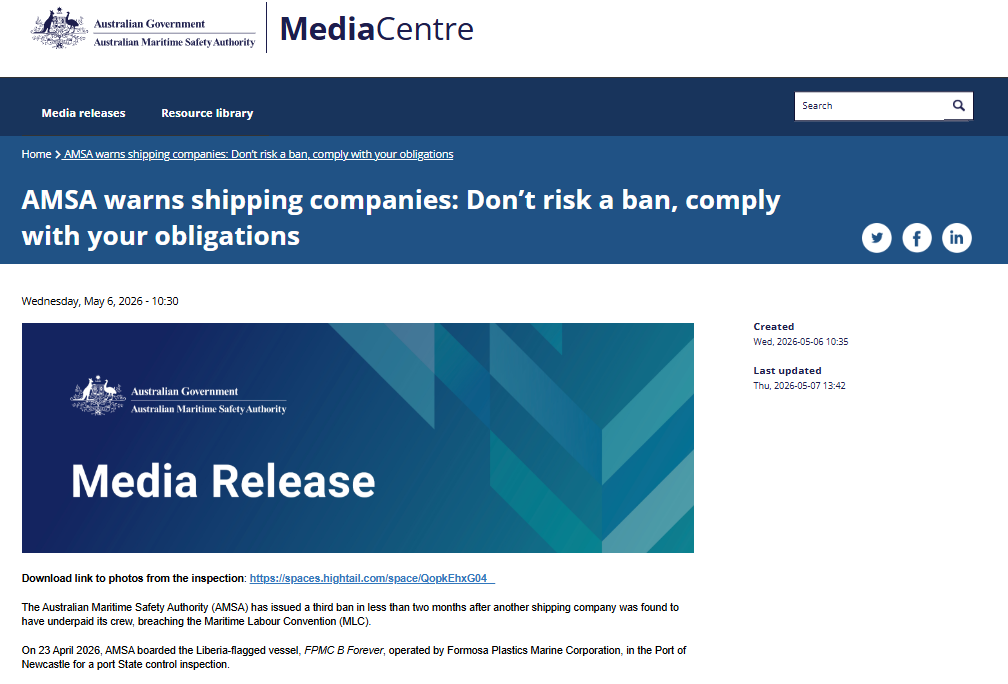
The Australian Maritime Safety Authority (AMSA) has imposed a ban on the bulk carrier FPMC B Forever, prohibiting it from entering Australian ports or waters until July 28, 2026.
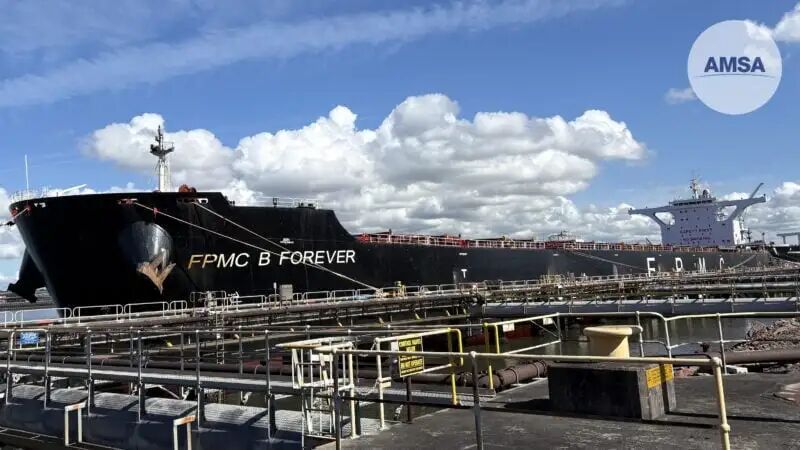
Source: AMSA (same below)
On April 23, 2026, AMSA inspectors conducted a Port State Control (PSC) inspection on the vessel FPMC B Forever (IMO: 9445253) at the port of Newcastle, Australia. The vessel is operated by Formosa Plastics Marine Corp. The inspection revealed multiple violations of the Maritime Labour Convention (MLC). Crew members had been short-paid by a total amount of nearly AUD 15,000, and were illegally charged for drinking water aboard the vessel—which, under international maritime labour standards, must be provided free of charge. Inspectors also identified several other deficiencies.
AMSA subsequently detained the vessel and issued a ban against the operator, effective immediately, barring the ship from entering Australian ports or waters. The ban was initially published as effective until October 4, 2026, but AMSA issued a corrigendum on May 7, 2026, confirming the revised end date as July 28, 2026.
Greg Witherall, AMSA's Acting Executive Director of Operations, stated unequivocally: "Regardless of the amount, underpaying seafarers' wages is illegal and will always trigger enforcement action. This ban should not be misconstrued. This action should serve as a clear warning to operators who attempt to cut corners at the expense of their crew." He further emphasized that seafarers perform some of the toughest jobs in the world, sustaining global trade under harsh conditions. Paying them their full wages on time is not optional; it is both a legal and a moral obligation. "The law is unequivocal: if you short-change your crew, the price you will ultimately pay far exceeds the amount you sought to withhold."
This enforcement action comes at a time of renewed international scrutiny on working conditions in the global shipping industry. With key shipping routes such as the Strait of Hormuz and the Red Sea facing ongoing security crises, thousands of seafarers are working under elevated operational risks, extended contract periods, and heightened psychological stress. AMSA demands that operators ensure timely payment of full wages, the provision of safe living conditions and adequate rest hours, and free access to essential onboard services.
For non-compliance, Australia will impose stringent measures including vessel detention, port entry bans, and increased inspection frequency. The regulator warns that operators failing to adhere to labour standards will face severe commercial consequences, including costly schedule disruptions, restricted port access, reputational damage, and cascading impacts on charterers, cargo owners, and logistics networks already strained by geopolitical and trade fluctuations. Detaining a vessel at a major port such as Newcastle could ripple through the supply chain, scrambling cargo delivery plans and introducing additional costs.
For globally operating shipping companies, Australia's latest ban sends an unequivocal signal: regulators are no longer limiting themselves to warnings or fines—they are now willing to take measures that can directly impact fleet operations and commercial access to key markets to combat labour violations.
More broadly, AMSA's recent consecutive issuance of vessel bans demonstrates a growing focus by Port State Control regimes on Maritime Labour Convention compliance. For shipping enterprises, labour conditions—including crew wages and access to essential onboard services—have now become critical compliance factors that can materially affect a vessel's ability to enter and leave ports.
Hot News