

A Week After Tugboat Capsizing, South Korean Coast Guard Raids 6 Shipping Companies!
Source:
2026-09-10
Nearly a week has passed since the tug TNS Catcher capsized in waters off Busan Port. The Maritime Service Network (CNSS) has learned that the Korea Coast Guard conducted surprise raids on the offices of several related companies and a shipping association yesterday (Sept. 8) as part of mandatory accident investigation procedures. Meanwhile, search and rescue operations, which had been restricted by bad weather, have resumed, but the six missing crew members remain unaccounted for.
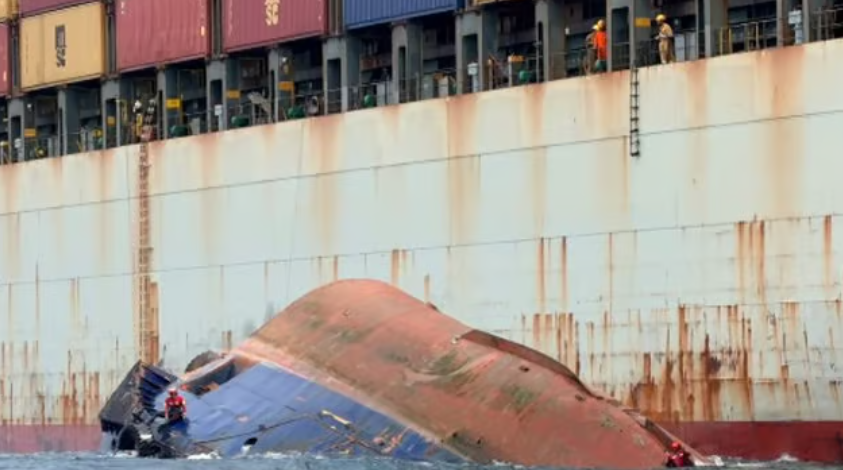
On Sept. 2, the tug TNS Catcher suddenly capsized while conducting towing operations for the Liberia-flagged container ship MSC Ikaria VI (279 meters long, 5,576 TEU capacity) in waters about 9 kilometers east of Oryukdo, Busan. The tug was built in 2007, with a gross tonnage of 444 tons and a length of 34 meters. There were eight crew members aboard at the time. Three tugs were assisting in maneuvering the container ship, and TNS Catcher was one of them.
At the time of the accident, the tug was working with two other tugs. Two were pulling on the container ship’s starboard side, and one was pushing on its port side. Video footage showed TNS Catcher suddenly capsizing during a turn. After the capsize, the ship’s cook climbed over the side and up onto the top of the vessel. He was spotted by crew members on the container ship, who lowered a ladder and rescued him. The body of another crew member was recovered from the water and pronounced dead after being taken to hospital. The remaining six crew members are still missing, and search efforts are continuing around the clock.
After the accident, the Korea Coast Guard immediately established an investigation headquarters and deployed 41 investigators. The capsized tug floated for several hours before drifting about 5.5 nautical miles from Busan and sinking. The Republic of Korea Navy has located the wreck at a depth of about 87 meters. Underwater visibility was initially poor, but conditions have now improved, and plans call for using a remotely operated vehicle (ROV) to conduct a more thorough search of the wreck.
On Sept. 8, the search area spanned 19 nautical miles, with 15 vessels and seven aircraft deployed. The Navy also used thermal imaging equipment to assist the search. Personnel from 48 coast guard stations in Busan and Ulsan also joined the maritime rescue teams in the ongoing search.
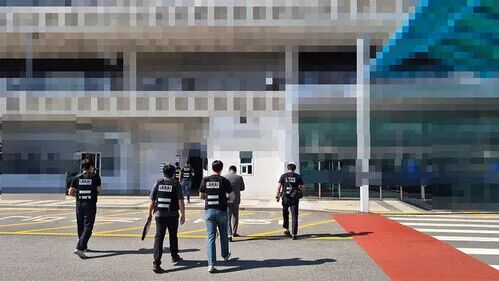
On Sept. 8, the Busan Coast Guard carried out “search and seizure” operations at the offices of six companies and one shipping association, while also conducting an on-site inspection of the container ship involved. The Coast Guard did not disclose the specific targets of the searches or explain the nature of these companies’ connection to the accident. Earlier reports said five entities were involved; the figure has now been updated to six companies and one association.
Investigators have obtained the tug’s navigation position data and Automatic Identification System (AIS) information, and will review the voice data recorder and other navigational materials. They have also obtained closed-circuit television (CCTV) footage from the scene. The investigation will focus on the tug’s speed and rate of turn during the turn, as well as the force on the towline, in order to ultimately determine the exact cause of the accident.
Currently, the container ship involved remains berthed at Busan Port, cooperating with the investigation.
Hot News