


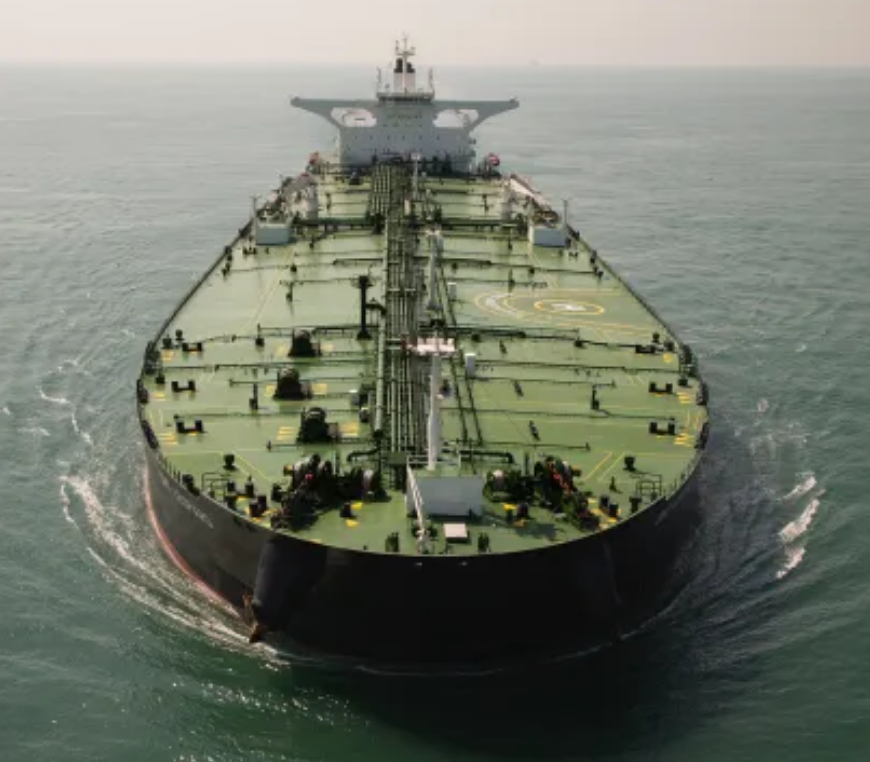
VLCC spot rates have pulled back from their peak...
Source:Beyond Shipping
2026-10-21
Shipbrokers said that, with fewer inquiries from charterers, crude tanker spot rates have pulled back from record highs, and fundamentals have at least temporarily shifted from shipowners to charterers.
In September, Persian Gulf countries including Saudi Arabia decided to export crude via ship-to-ship (STS) transfers despite Iranian attacks, driving a surge in crude tanker spot rates. The “cascade” effect that drove the surge in VLCC, Suezmax and Aframax rates in the Atlantic market is now reversing.
Clarksons Securities said, “The pullback [in spot rates] has tested investor sentiment, and with some uncertainty created by an increase in Iranian attacks, there is a risk that Middle East export volumes reverse.”
In addition, reports said the US plans to lift sanctions on some “shadow tankers” to lower tanker rates. On this, Clarksons Securities and BRS agreed that the US plan cannot reduce extremely high tanker freight rates.
BRS noted, “The main argument of the US government is that rising freight rates are supporting oil prices, so if more ships can transport mainstream cargoes, oil prices will ease somewhat.”
BRS said, “Ship-tracking data show that most sanctioned tankers are either already carrying oil or are located far from loading areas, so this argument is rather weak. Therefore, it would take a considerable amount of time for ships currently deployed in ‘grey’ trade to be redeployed into mainstream trade.”
Clarksons Securities said that intensifying Iranian attacks are reducing the number of STS transfers, but not by much.
In other words, navigation through the Strait of Hormuz is subject to “dispute and restrictions, rather than closure.”
Baltic Exchange data show that as of October 19, the TD34 Gulf of Oman–China VLCC round-trip daily rate was $790,181, down 13% from its early-October peak and the lowest level since September 14.
In the Atlantic market, the West Africa–China route (TD15) had an average round-trip TCE of about $639,554 per day. The US Gulf–China route (TD22) had an average round-trip TCE of about $514,869 per day.
BRS said, “Market sentiment is under pressure due to limited demand and a weak Eastern market.”
Suezmax tankers
Suezmax tanker rates soared in early October as charterers split VLCC cargoes to avoid rising transport costs.
Baltic Exchange data show that as of October 19, the West Africa–Europe Suezmax index stood at $479,527 per day, down 16% from its lowest peak since October 1.
BRS said, “The market was weak last week because new inquiries remained limited.”
BRS noted, “The VLCC pullback may further limit demand for Suezmax tankers,” and “without new cargoes, fundamentals may shift further in favor of charterers.”
Hot News