


EPS Receives World's First Ammonia Dual-Fuel VLAC
Source:
2026-10-26
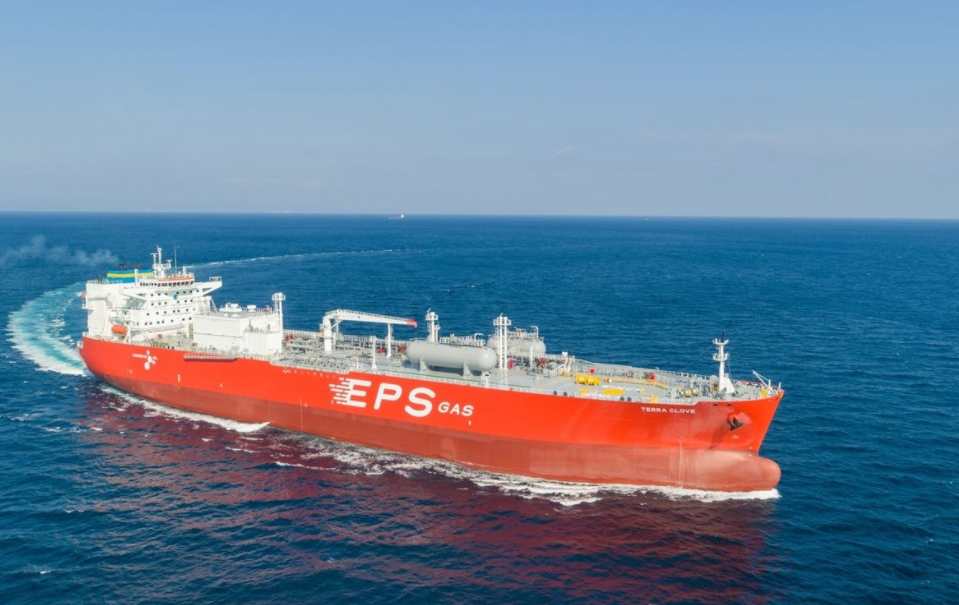
Recently, the World Shipping Council (WSC) released its latest dual-fuel fleet monitoring report, showing that the number of dual-fuel container ships and car carriers in operation worldwide has reached 503, up 41% year on year from 358 in September 2025. Adding 849 ships on order and awaiting delivery, the global total of delivered and orderbook vessels has reached 1,352, with cumulative industry investment exceeding US$200 billion, marking an important step in the shipping industry's green transition.
Dual-fuel ships can be compatible with traditional marine fuel oil while also supporting low-carbon alternative fuels such as methanol and hydrogen, effectively reducing vessel greenhouse gas emissions. They are a key ship type for the shipping industry to achieve its emission reduction targets. In terms of order structure, the penetration rate of dual-fuel ship types varies enormously across different segments. Measured by deadweight tonnage, dual-fuel accounts for 65% of new container ship orders and as much as 97% of car carrier (ro-ro) orders, while the overall dual-fuel share of orders in the remaining shipping segments is only 23%. Container shipping and car carriage have become the main forces in dual-fuel ship investment.
It is worth noting that even with the high enthusiasm for green newbuilding investment, orders for traditional fuel-powered ships continue to grow. Disrupted shipping in the Red Sea and Gulf region has increased ship-to-ship transfer operations, and rising oil prices have driven tanker market demand, pushing up newbuilding orders for conventionally powered tankers in tandem. This reflects that shipowners, against the backdrop of the energy transition, still take real market demand into account and are becoming more prudent and pragmatic in their investment decisions.
Joe Kramek, President and CEO of the World Shipping Council, pointed out that huge capital has already been invested in dual-fuel ships, but hardware investment does not equal delivered emission reductions. The biggest pain point at present is insufficient port bunkering infrastructure and the high price of green alternative fuels. Without commercially competitive low-carbon fuels, this batch of new ships cannot fully unlock their emission reduction potential. "Ships ordered today will serve for decades to come, and shipowners and clean fuel producers need to plan jointly and long-term for the future fleet and alternative fuel supply chains," Kramek said.
The report highlights in particular the risk of regulatory uncertainty. The large-scale deployment of dual-fuel ships urgently requires a globally unified, mandatory measurement standard to strengthen shipowners' and investors' confidence in the profitability prospects of alternative fuels. The WSC calls on International Maritime Organization (IMO) member states to strengthen cooperation and establish a unified global decarbonization governance framework as soon as possible. Every policy delay amplifies industry uncertainty and raises the cost of the entire shipping economy's transition.
From the industry's practical reality, although methanol and LNG dual-fuel ship technologies are already mature, production capacity for fuels that truly achieve deep decarbonization, such as green methanol and green ammonia, is severely insufficient, with a huge supply gap, and fuel prices are several times higher than traditional fuel oil. Even shipowners with dual-fuel ships still mainly use conventional fuel oil in daily operations, leaving the green potential of the equipment idle. The lag in construction of port bunkering facilities further limits the practical space for dual-fuel ships to switch to low-carbon fuels.
Industry analysis holds that 500 dual-fuel ships in service is a milestone in shipping decarbonization, but it is only a breakthrough at the hardware level. After the large-scale greening of ship hardware, fuel supply, port infrastructure, and globally unified rules will become the core contradictions of the next stage of the transition. If progress on the fuel side and the institutional side cannot keep pace with shipbuilding speed, after more than a thousand dual-fuel new ships are delivered, they may fall into the awkward situation of "ships without green fuel," and the emission reduction benefits of huge investments will be greatly discounted.
In the future, the pace of implementation of IMO global emission reduction rules and the speed of green fuel capacity expansion will determine how much this US$200 billion dual-fuel fleet investment can actually drive the shipping industry toward its carbon neutrality goals.
Hot News