


Ships plagued by repeated attacks, dry bulk market outlook remains uncertain...
Source:
2026-11-02
Filipe Gouveia, Shipping Analysis Manager at the Baltic and International Maritime Council (BIMCO), recently said: “Geopolitical turmoil continues to cast a shadow over the outlook for the dry bulk shipping market. The de facto closure of the Strait of Hormuz remains the biggest current market uncertainty, while attacks on ships and port infrastructure in the Black Sea have further heightened market risks.”
Normally, about 4% of dry bulk shipping demand involves routes through the Strait of Hormuz. Alternative routes have mitigated the impact of shipping disruptions to some extent, but they still cannot fully make up for pre-war volumes. Shipping disruptions have also tightened energy and fertilizer supplies, weighed on global economic growth, and raised concerns about food security.
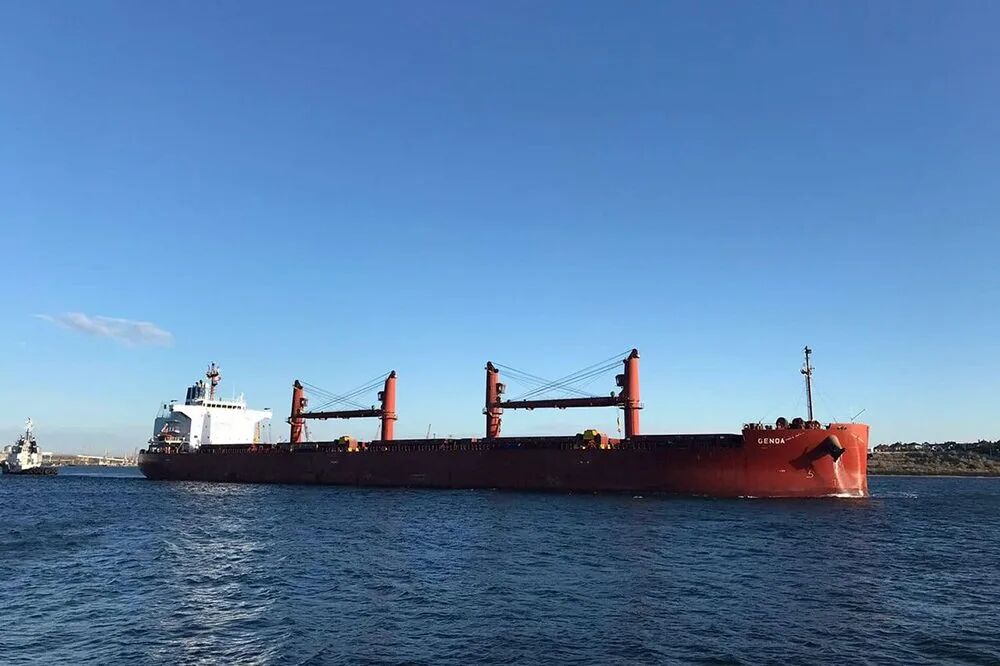
Given the considerable market uncertainty, BIMCO proposed two forecast scenarios: the “Strait of Hormuz closed” scenario assumes that the Strait remains effectively closed in 2027 and 2028; the “Strait of Hormuz open” scenario assumes that ships can pass freely through the Strait from 2027.
Gouveia said: “We expect the supply-demand balance in the dry bulk shipping market to gradually weaken in 2027 and 2028, but it will still remain at a relatively high level overall. Cargo volume growth is expected to be limited, while new ship deliveries will accelerate, especially for Capesize vessels.”
If the Strait of Hormuz remains closed, BIMCO expects tonnage demand to grow by 0.5% to 2.5% in 2027, while capacity supply will grow by 3% to 4%. If the Strait reopens, both demand and supply growth are expected to be 1 percentage point higher.
BIMCO said: “In this scenario, driven by improved economic conditions and increased import demand from countries along the Persian Gulf, demand for cargoes other than coal will grow faster. At the same time, the fleet currently stranded in the Persian Gulf will resume normal operations, and vessel speeds may also be slightly higher than in the other scenario, further increasing capacity supply.”
BIMCO expects tonnage demand to grow by 0.5% to 2.5% in 2028 under both scenarios, while capacity supply will grow by 3% to 4%. Affected by the decline in coal shipments, cargo volume growth is expected to be relatively limited; in addition, the return of bulk carriers to the Panama Canal may curb growth in average transport distance.
On the capacity supply side, as new ship deliveries increase, the fleet size is expected to expand significantly, although ship scrapping will also increase over the same period. Finally, as market conditions weaken, average vessel speeds are expected to decline slightly.
Gouveia said: “Shipping disruptions in the Black Sea are another downside risk facing the market outlook. The current forecast assumes that Russian and Ukrainian grain that could not be shipped in 2026 will be exported in 2027. However, if these cargo volumes ultimately cannot recover, dry bulk cargo volume growth in 2027 could be reduced by up to 0.5 percentage points, and grain shipment volume growth could be reduced by up to 4 percentage points.”
Hot News