


Tanker Rams Freighter; Skipper and Third Officer Face Manslaughter Charges
Source:
2026-09-08
Turkish authorities have launched an investigation into a maritime collision involving the tanker ALSU and the general cargo ship Tugberk Imamoglu in the Sea of Marmara. The incident occurred in the early hours of September 1, resulting in the rapid sinking of the cargo vessel, with 10 crew members still missing.
The Turkish prosecutor's office acted swiftly, arresting the tanker's captain and third officer on September 3, and formally charging both with involuntary manslaughter on September 4.
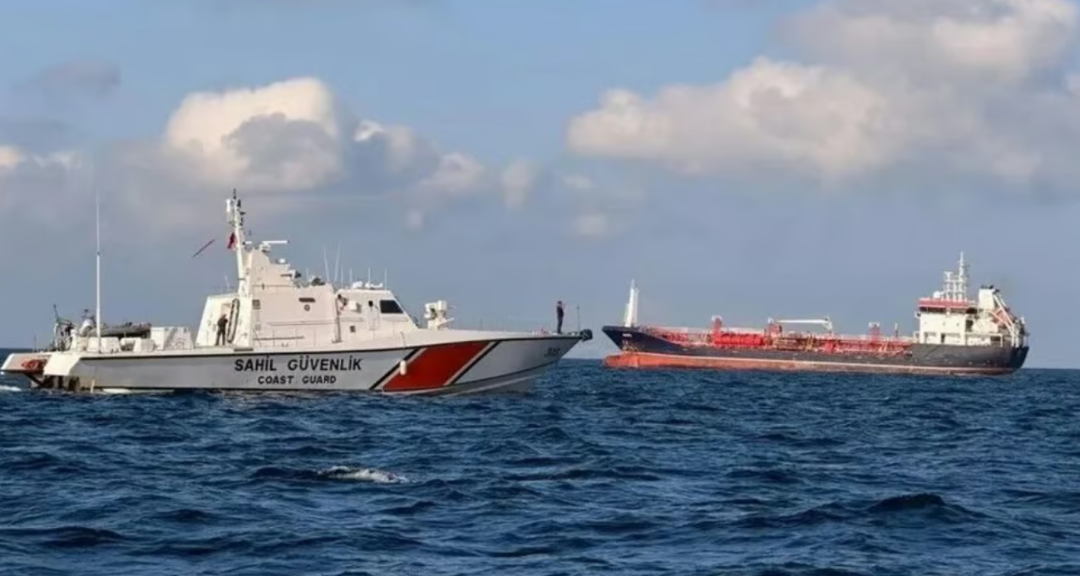
At the time of the collision, the Tugberk Imamoglu was carrying 4,199 tonnes of steel coils while sailing near Istanbul. Following the impact, the weight of the steel coils accelerated the vessel's flooding, causing it to capsize and sink within approximately 10 minutes in waters about 900 meters deep. Despite extensive search-and-rescue operations by the Turkish Navy and Coast Guard, the 10 missing crew members have not been found, and hopes for their survival are fading.
After the accident, authorities in Silivri detained nine crew members of the tanker *ALSU*, with only the cook not taken into custody.
On September 3, prosecutors brought the captain, senior officers, and other crew members before the Silivri District Court. Following hearings, the court ruled that four crew members be released under judicial supervision, while the captain and third officer were formally arrested on suspicion of involuntary manslaughter. Prosecutors charged the captain with failing to supervise navigational safety—he was asleep at the time of the collision and only became aware of the situation after the impact, a fact he acknowledged in his testimony. The third officer, who was the officer on watch at the time, was found to lack necessary experience and failed to take effective measures to avoid the collision. Both were deemed to have neglected their statutory duties, directly leading to the accident.
A preliminary investigation report prepared by a panel of experts established after the incident indicates that the collision was not the fault of a single party; both vessels had operational and safety deficiencies.
Key issues identified on the tanker *ALSU* included: the third officer on watch had recently joined the vessel and was on his first solo watch, unfamiliar with the navigation equipment; the bridge was not staffed with a dedicated helmsman or lookout—some reports stated that only an intern was present, while others suggested no lookout was posted at all. The report noted multiple safety violations on board, and that the crew's emergency response and poor judgment exacerbated the consequences of the accident.
Regarding the Tugberk Imamoglu, investigators found that the vessel was not transmitting Automatic Identification System (AIS) signals; it remains unclear whether this was due to equipment failure or intentional deactivation. The expert panel also noted that the cargo vessel's loading condition (overweight steel coils) may have affected its stability and requires further verification.
Prosecutors additionally revealed that about five minutes before the collision, the two ships had exchanged radio communications to agree on passing arrangements. An order has been issued to retrieve and preserve the radio recordings, as well as to fully preserve navigational records and other voyage data. Alcohol tests on all involved crew members returned negative results, and comprehensive blood tests have been arranged.
Investigators are currently making every effort to obtain the Voyage Data Recorder (VDR), which will serve as critical evidence in determining liability. Search efforts for the missing crew members continue, but progress has been extremely difficult due to water depth and adverse sea conditions. Prosecutors stated that they will further build the chain of evidence based on the radio recordings, navigational logs, and expert reports, and will pursue criminal liability in accordance with the law. The investigation remains ongoing.
Hot News