


1,340 Ships Transited in a Single Month! Suez Canal Makes a Strong Recovery
Source:
2026-09-10
Ossama Rabiee, Chairman and Managing Director of the Suez Canal Authority, recently revealed in an interview on a local television talk show that in the second half of 2026, ship traffic through the Suez Canal increased by 40% year-on-year. According to Bloomberg analysis, the canal's revenue in July rose 42% year-on-year.
According to data from Egypt's national statistics agency CAPMAS, a total of 1,340 ships transited the canal that month, an increase of 27% compared with July 2025, and also higher than the 1,208 ships in June this year, continuing the partial recovery trend that has emerged since the beginning of the year. Among the ships transiting in July, oil tankers accounted for 526, higher than 485 in the previous month. In terms of revenue, CAPMAS data showed that canal revenue rose to US$505 million in July, the highest monthly level since December 2023.
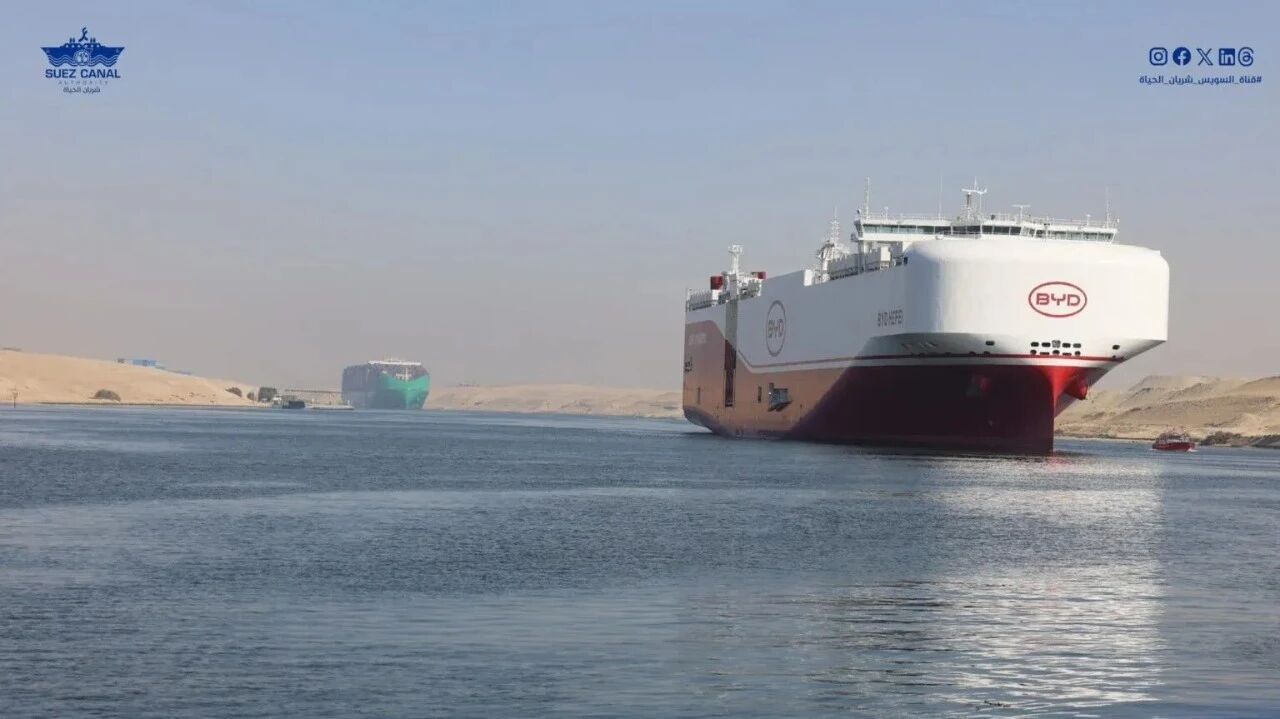
CAPMAS analysis pointed out that the growth was mainly driven by geopolitical factors: the Strait of Hormuz was effectively closed due to regional conflict, and the Houthis continued to threaten shipping safety in the southern Red Sea, prompting more ships to reroute through the Suez Canal. Specifically, Saudi Arabia's crude oil exports were diverted via the Red Sea because of obstruction in the Strait of Hormuz, while the Houthi threat also led many ships to avoid the Bab el-Mandeb Strait and choose to exit from the northern Red Sea.
In addition, congestion at Asian ports may also have become a practical force driving capacity back to the Suez Canal. According to Linerlytica data, the backlog of port congestion in Asia has reached 4.3 million TEU, exceeding the 4 million TEU level at the peak of the pandemic. The Cape of Good Hope diversion route has absorbed about 5% to 7% of global container capacity, equivalent to 1.7 million to 2.4 million TEU.
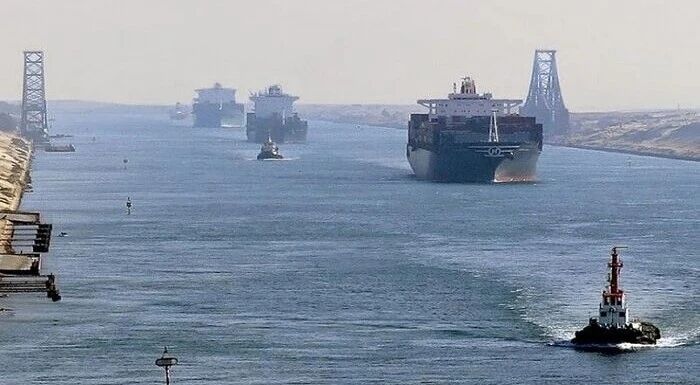
Andrea Monti, CEO of Italian container logistics company Sogese, said: "Congestion has become a more pressing variable. Carriers had previously been waiting for the security situation to stabilize before reallocating capacity through the Suez Canal. But the situation has now changed, and the cost of waiting is rising faster than the risk of transit."
Mohamed Abu Basha, head of macroeconomic analysis at Egyptian investment bank EFG Hermes, said the canal's recovery trend is expected to continue in the coming months, as crude oil exports from Asia continue to adjust via diversion and several European shipping companies have announced the resumption of some Red Sea route services—MSC, Maersk and Hapag-Lloyd have in recent weeks successively returned some routes to the Suez Canal:
MSC has deployed three ultra-large container ships to the Indian subcontinent-to-Mediterranean and Mediterranean-to-Far East routes, namely the 24,232 TEU "MSC Irina" and "MSC Michel Cappellini," as well as the 19,224 TEU "MSC Tina";
Maersk has also redeployed multiple ships to shorter routes, involving the Far East to the Mediterranean and Northern Europe, the Indian subcontinent to the US East Coast, and the Middle East to West Africa. The most recent ship to return to the Suez Canal route was the 20,568 TEU "Manchester Maersk";
CMA CGM is the carrier operating most steadily via Red Sea routes, with services covering the Far East to Europe (including the Mediterranean), India to the US East Coast, and India to the Mediterranean. The company currently has six ultra-large container ships operating on the above Red Sea routes: "CMA CGM Notre Dame," "CMA CGM Sorbonne," "CMA CGM Saint Germain," "CMA CGM Champs Elysees," "CMA CGM Seine" and "CMA CGM Rivoli";
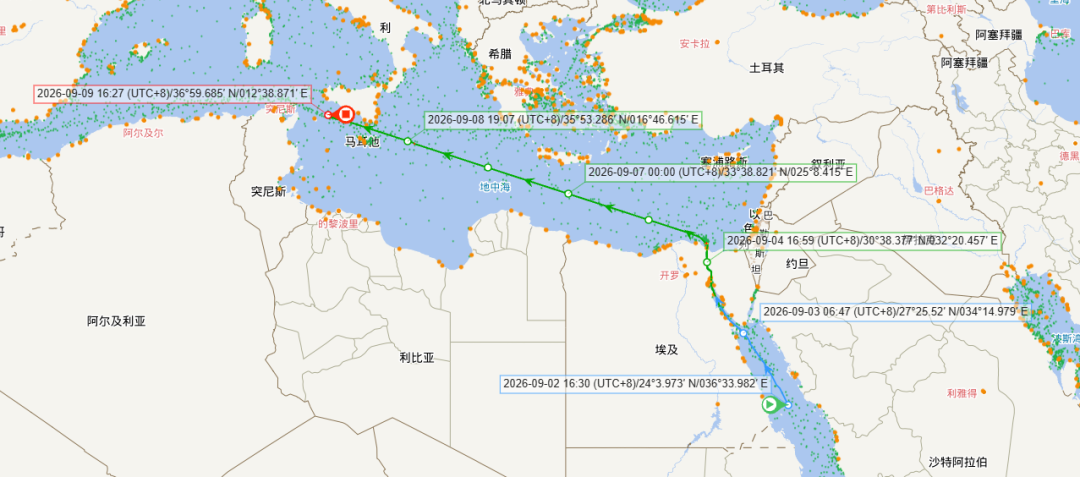
Hapag-Lloyd's 14,990 TEU "Al Jmeliyah" has now passed through the Bab el-Mandeb Strait, heading toward the Suez Canal and the Mediterranean, but for now this appears to be only a one-off Suez Canal transit. AIS data shows the ship is located about 100 kilometers southeast of Sicily and is expected to arrive at the Spanish port of Algeciras on September 12.
Linerlytica said Maersk has begun regular westbound transits on routes such as NE1/AE2, SE2/AE11, SE3/AE15 and SE4/AE19, and with the coordinated push by Gemini partner Hapag-Lloyd, the two sides are working toward a full return to Suez Canal routes.
Ossama Rabiee expects full-year canal revenue in 2026 to climb from US$4.1 billion in 2025 to US$5.8 billion to US$6 billion.
Hot News