


Spain Adjusts Shipbuilding Support Rules to Boost Shipyard Industry Recovery
Source:Beyond Shipping
2026-09-08
Spain has broadened the provisions of its national shipbuilding financing support framework, permitting approved projects to apply for adjustments to their original subsidy amounts if significant changes occur in the construction contract or financing structure before the vessel is delivered.
According to reports, this royal decree officially took effect on September 4, filling a regulatory gap left by last year's revision to Spain's shipbuilding support framework.
Under the new regulation, projects that had already received interest-rate subsidy approvals under the old policy framework can now apply for subsidy modifications in accordance with the 2025 revised rules, as long as the vessel has not yet been delivered to the owner. Newly submitted applications and outstanding old cases that have not yet received subsidy approvals were already covered by the updated rules.
This revision does not create new approval channels or add extra documentation requirements. The Spanish government positions it as a limited transitional adjustment, aimed at ensuring that already-approved projects are treated equally with other vessels that have not yet been delivered but have experienced major changes in construction or financing arrangements.
The policy adjustment comes as Spanish private shipyards are enjoying their fullest order books in years.
According to Spanish government statistics, at the end of 2025, the country's private shipyards held orders for 65 vessels, with a total contract value exceeding €3 billion (approximately $3.5 billion), marking the highest level of industry activity in 15 years. More than 90% of these orders are for export; in terms of new vessel orders and order-book size, Spain ranks second among EU member states.
Unlike large Asian shipyards, Spain's private shipbuilding industry does not focus on the mass production of standardized bulk carriers, large container ships, or oil tankers. Its strengths lie in the high-value-added specialized vessel segment.
Domestic shipyards have established competitive advantages in offshore wind farm service vessels, oceanographic research vessels, aquaculture workboats, large fishing vessels, passenger ships and ferries, specialized tugboats, and offshore support vessels. Spanish government data shows that the country ranks first in the EU in the construction of offshore wind support vessels, oceanographic research vessels, aquaculture vessels, and passenger ships.
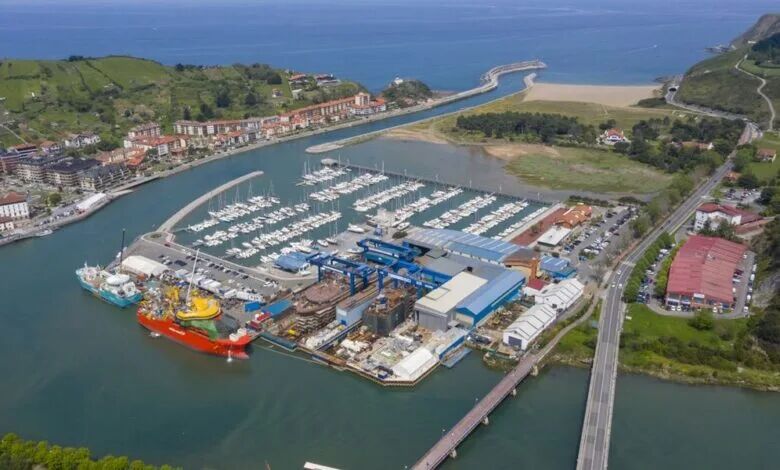
The importance of offshore-related vessels continues to grow. AD Ports Group acquired the Astilleros Balenciaga shipyard for €11.2 million (approximately $13.1 million). This shipyard is one of the few in Spain with proven construction track records for offshore wind service and maintenance vessels, research vessels, offshore support vessels, and specialized tugboats.
Hot News